
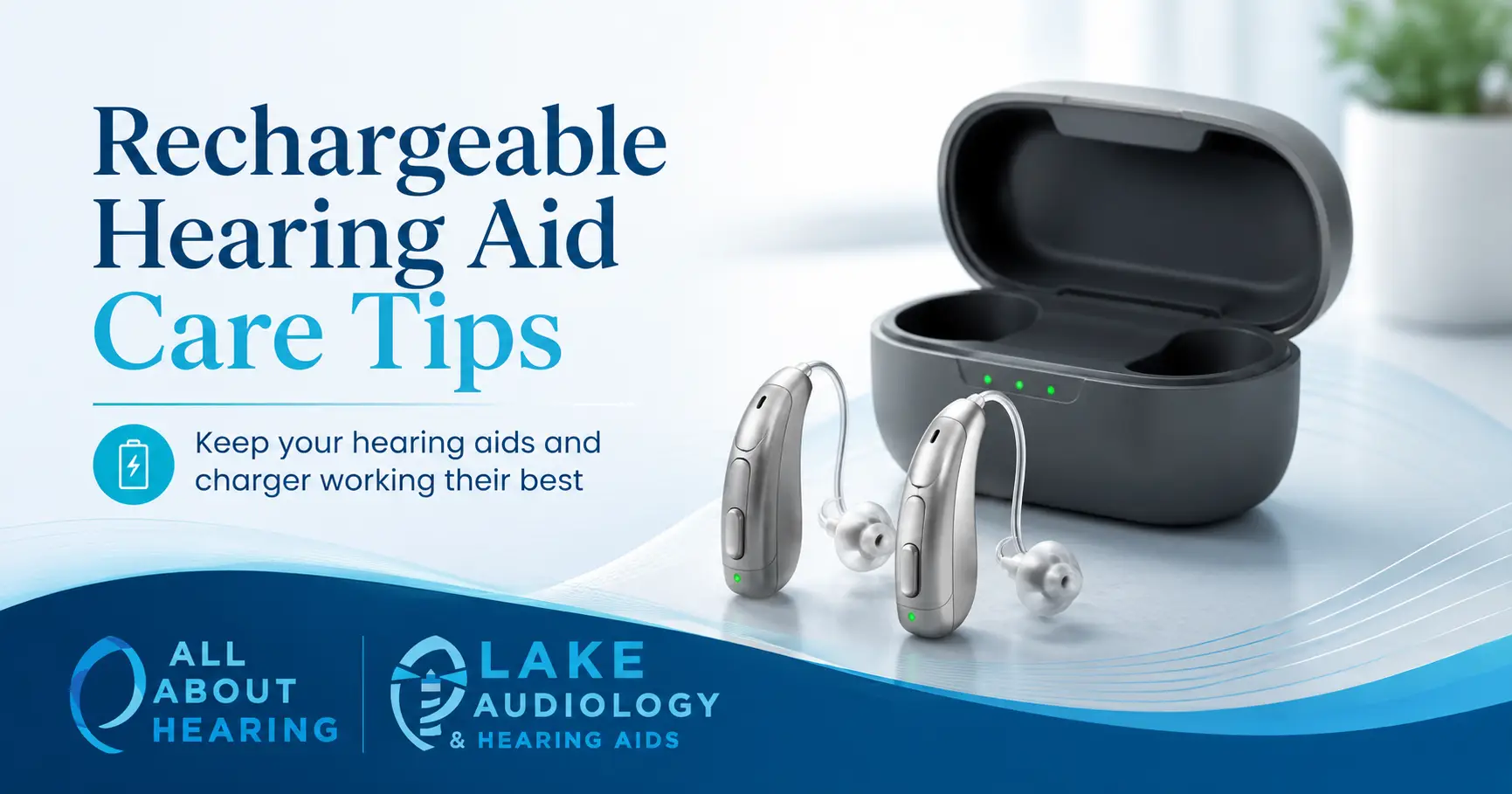
Rechargeable Hearing Aid Care: How to Keep Your Hearing Aids and Charger Working Their Best
Rechargeable hearing aids are convenient, reliable, and easy to use — but proper care is essential. These simple hearing aid maintenance tips can help improve charging performance, reduce repairs, and protect your investment.
Today’s rechargeable hearing aids are designed to simplify daily life. Instead of changing tiny disposable batteries, you can place your hearing aids in the charger overnight and wake up ready to hear.
However, your hearing aid charger is not just an accessory. It is an important part of the hearing aid system. At All About Hearing in Longwood and Lake Audiology in Mount Dora, our Doctors of Audiology often see charging problems caused by moisture, wax, debris, heat exposure, improper storage, or worn rechargeable batteries.
Why You Should Bring Your Hearing Aid Charger to Every Appointment
If your hearing aids are not charging fully, dying too quickly, or not sitting properly in the charger, the issue may not be the hearing aid itself. It may be the charger, charging contacts, moisture, debris, charging cable, or rechargeable battery.
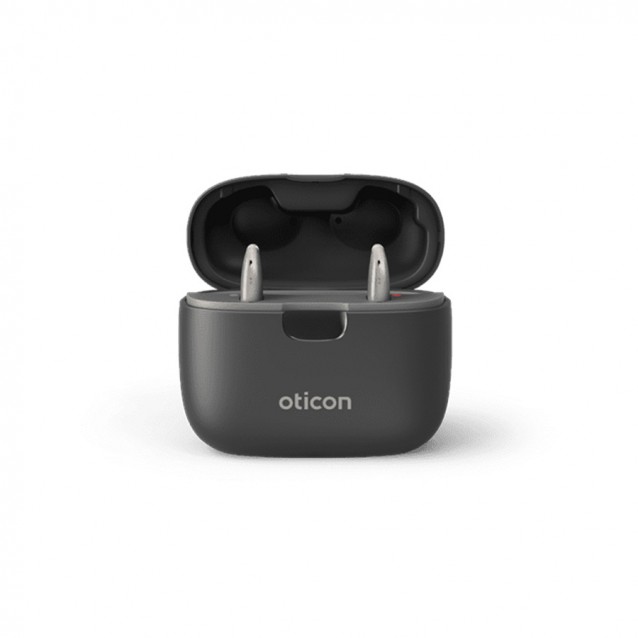
At your appointment, your hearing professional may check:
- The overall function of your rechargeable hearing aids
- The overall function of your hearing aid charger
- Charging ports, posts, and contacts
- Visible debris, wax, or moisture
- Wear and tear on the hearing aids or charger
- Whether the hearing aids are seating correctly in the charger
A professional hearing aid check can help catch small issues before they become frustrating charging failures or repair problems.
Where Should You Store Rechargeable Hearing Aids?
The best place to store your hearing aids and charger is a clean, dry location such as a dresser, nightstand, or bedroom table. Avoid storing rechargeable hearing aids in areas with moisture, steam, or temperature changes.
Best Storage Spots
- Bedroom nightstand
- Dresser
- Dry office desk
- Safe location away from pets and children
Places to Avoid
- Bathroom counters
- Kitchen counters near sinks
- Windowsills
- Hot cars
- Humid or damp areas
How to Clean Rechargeable Hearing Aids and Chargers
Wax, dust, moisture, and skin oils can build up on hearing aids and charging contacts. Even a small amount of debris can interfere with charging or sound quality.
Safe Cleaning Tips
- Inspect your hearing aids and charger regularly for debris.
- Use the cleaning brush or tool provided by your hearing professional.
- Gently wipe the hearing aids with a dry, soft cloth.
- Check the charging ports or posts for wax or buildup.
- Keep the charger and hearing aids clean and dry.

Can You Use a Hearing Aid Drying System?
In Florida’s humid climate, moisture control is especially important. Some patients benefit from using an electronic hearing aid drying system. However, rechargeable hearing aids require extra caution because excessive heat can affect rechargeable battery health.
If you use an electronic drying system, ask your hearing professional to confirm that the temperature does not exceed 40°C or 104°F.
Use the Correct USB-C Charging Cable
Always use the USB-C charging cable that came with your hearing aid charger whenever possible. Different cables and power adapters may look similar, but they may not provide the same charging performance.
If your rechargeable hearing aids are charging slowly, charging inconsistently, or not charging at all, bring the hearing aids, charger, cable, and power adapter to your appointment so the entire system can be checked.
Can Rechargeable Hearing Aids Stay in the Charger Overnight?
Yes. In most cases, it is safe to keep your rechargeable hearing aids in the charger after they are fully charged. It is also safe to place them in the charger whenever you are not wearing them.
This routine helps keep your hearing aids protected, charged, and easy to find.
What if you will not wear your hearing aids for several days?
If you will not be wearing your rechargeable hearing aids for more than three days, unplug the charger and remove the hearing aids from the charging ports or posts. You may store them inside the open space within the charger, depending on your charger style.
Signs Your Rechargeable Hearing Aids Need Professional Service
Rechargeable hearing aid batteries are designed to last for years, but they may eventually need professional service or replacement. If your hearing aids are no longer holding a charge, dying much earlier in the day, or charging inconsistently, schedule a hearing aid check before assuming you need new devices.
In many cases, the problem may be related to debris, moisture, charger contacts, the charging cable, or a battery that needs manufacturer service. Our team can inspect your devices and help determine whether your hearing aids can be serviced through our hearing aid repairs service.
Schedule a hearing aid check if you notice any of the following problems:
- Your hearing aids are not holding a charge as long as they used to.
- One hearing aid charges but the other does not.
- The charger light is blinking or showing an error.
- The hearing aids only charge when positioned a certain way.
- You see visible wax, corrosion, moisture, or debris.
- The devices sound weak, distorted, or intermittent.
Professional hearing aid cleaning and troubleshooting can often solve small problems before they become more expensive repairs or require battery replacement.
Rechargeable Hearing Aid Care FAQs
Should I bring my charger to my hearing aid appointment?
Yes. Your charger is part of your rechargeable hearing aid system. Bringing it to every appointment allows your audiologist to check the hearing aids, charger, cable, charging contacts, and overall function.
Can I clean my hearing aid charger with alcohol or water?
No. Do not use water, alcohol, solvents, or cleaning fluids on your charger or rechargeable hearing aids. Use a dry, soft cloth or the cleaning tool provided by your hearing professional.
Is it safe to leave hearing aids in the charger overnight?
Yes. Most rechargeable hearing aids are designed to stay in the charger after they are fully charged and whenever they are not being worn.
Where should I store my rechargeable hearing aids?
Store your hearing aids and charger in a clean, dry place such as a nightstand or dresser. Avoid bathrooms, kitchens, windowsills, and hot cars.
Need Help With Rechargeable Hearing Aid Problems?
If your rechargeable hearing aids are not charging properly, losing power too quickly, or not performing their best, our Doctors of Audiology can help. Schedule a hearing aid check at our Longwood or Mount Dora office.